How Do Injection Molding Machines Create Something as Delicate as Plastic Flowers?
Struggling to make intricate plastic parts? The process seems complex and costly. I can show you how injection molding masters even the most delicate designs, like beautiful plastic flowers.
Injection molding machines create plastic flowers by melting plastic pellets, injecting the molten plastic into a flower-shaped mold cavity under high pressure, and then cooling it until it solidifies. The machine then opens the mold and ejects the finished, detailed plastic flower.
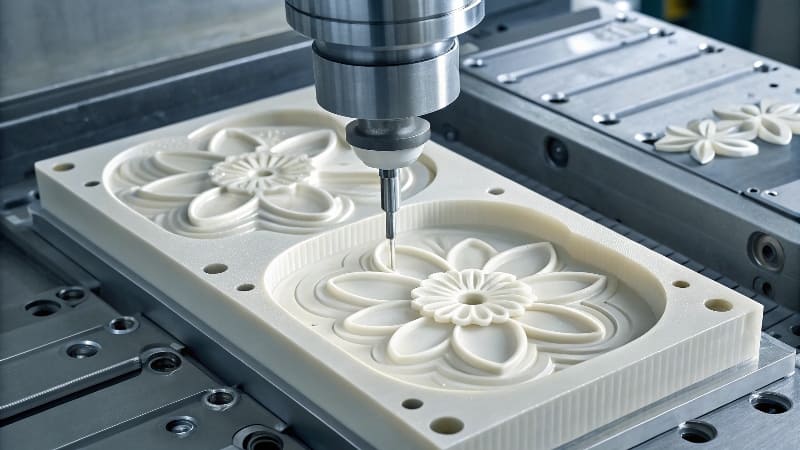
Creating something as detailed as a flower with a powerful machine might seem impossible. But the magic is all in the process and the precision of the mold. It's a fascinating dance between heat, pressure, and timing. I’ve spent my life in this industry, and I'm still amazed by what we can create. Let me walk you through how it all comes together, from simple pellets to a final product.
How are plastics formed with injection molding?
Are your plastic parts not forming correctly? It’s frustrating when designs fail during production. I will explain the fundamental steps to ensure your plastic parts are formed perfectly every time.
Plastics are formed by melting solid pellets in a heated barrel. A screw then injects this molten material into a closed mold. The plastic cools and hardens inside, taking thez shape of the mold cavity1 before being ejected as a solid part.
<sup id=](https://demo.imikerai.com/wp-content/uploads/2025/08/provide-an-illustration-for-the-following-text-ho-2.jpg) 2 being melted and injected into a mold." title="Plastic Formation in Injection Molding" />
2 being melted and injected into a mold." title="Plastic Formation in Injection Molding" />
Let's break down the journey of a plastic pellet into a finished part. It's a four-step process that happens very quickly, sometimes in just a few seconds. First, the plastic pellets2 are fed into the machine. Then, they are melted into a liquid. Next, this liquid plastic is forced into a mold. Finally, the plastic cools down and becomes a solid part. Understanding each stage is key to troubleshooting any problems you might have. I've seen many designers3 like Jacky struggle with this, but once you grasp the core principles, it becomes much clearer. The real skill is in controlling the temperature, pressure, and time for each of these steps.
| Stage | Description | Key Factors |
|---|---|---|
| 1. Melting | Solid plastic pellets2 are fed from a hopper4 into a heated barrel. A rotating screw moves them forward, melting them into a molten state. | Temperature, Screw Speed |
| 2. Injection | The screw pushes forward like a plunger, forcing the molten plastic into the closed mold cavity1 at high pressure5. | Injection Pressure, Speed |
| 3. Cooling | The plastic cools and solidifies, taking the exact shape of the mold. Water circulates through channels in the mold to speed this up. | Cooling Time, Mold Temperature |
| 4. Ejection | The mold opens, and ejector pins6 push the now-solid plastic part out of the mold. | Ejection Force, Speed |
How do plastic injection molding machines work?
Confused by the complex parts of an injection molding machine? You’re not alone. I’ll simplify it for you, showing you the two main units and how they work together.
An injection molding machine works using two main units. The injection unit melts and injects the plastic. The clamping unit7 holds the mold shut during injection and opens it to eject the finished part. These two units work in perfect sequence to produce parts.
7 labeled." title="Injection Molding Machine Components" />
Think of an injection molding machine as having two hands. One hand prepares the material, and the other holds the shape. The "injection unit" is the hand that melts the plastic pellets2 and squirts them out. It has a hopper4 to hold the pellets, a barrel with heaters, and a big screw inside. The "clamping unit7" is the other hand. It's a powerful vise that holds the two halves of the mold together very tightly. It has to be strong enough to resist the massive pressure from the injected plastic. Once the plastic is inside and has cooled, the clamping unit7 opens up, and the part comes out. I remember when I first started in a factory, just watching these two units work in sync was mesmerizing. Their coordination is what makes mass production8 possible.
| Machine Unit | Key Components | Function |
|---|---|---|
| Injection Unit | Hopper, Barrel, Heaters, Reciprocating Screw | Melts plastic pellets2 and injects the molten material into the mold. |
| Clamping Unit | Platens (Fixed & Moving), Tie Bars, Ejector System | Holds the mold securely closed against injection pressure, then opens the mold and ejects the part. |
How much does a plastic injection molding machine cost in the US?
Wondering about the investment for an injection molding machine? The price range is huge and can be confusing. I'll explain the factors that determine the cost so you can budget effectively.
A plastic injection molding machine in the US can cost anywhere from $25,000 for a small, used machine to over $500,000 for a large, new, high-precision model. The price mainly depends on the machine's size (clamping force9 tonnage) and features.
Buying an injection molding machine is a major business decision. The biggest factor in the price is the "clamping force9," measured in tons. This is the force the machine uses to hold the mold closed. A small machine for making tiny parts might be 50 tons. A large machine for making car bumpers could be 4,000 tons or more. More tonnage means a bigger, more expensive machine.10 Brand name, whether it's new or used, and any special features like robotic arms also change the price a lot. Remember, the cost of the machine is separate from the cost of the mold itself, which can also be a significant investment. I always advise my clients to think carefully about the size of the parts they plan to make before buying a machine.
| Machine Size (Tonnage) | Typical Use | Estimated New Price (USD) |
|---|---|---|
| Small (Under 100 tons) | Small consumer goods, electronic components | $40,000 - $100,000 |
| Medium (100 - 500 tons) | Housewares, medium-sized parts, plastic flowers11 | $100,000 - $300,000 |
| Large (Over 500 tons) | Automotive parts, large bins, furniture | $300,000+ |
Is plastic injection molding profitable?
Worried that the high initial costs of injection molding won't pay off? It's a valid concern. I will show you how, despite the investment, this process can be highly profitable.
Yes, plastic injection molding is very profitable for high-volume production. The high initial cost of the machine and mold is offset by the extremely low cost per part and fast production cycles12, leading to significant returns when manufacturing thousands or millions of units.
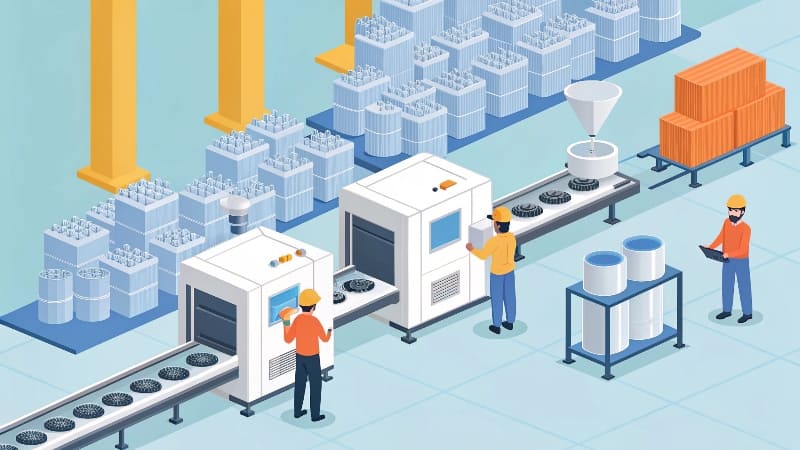
The path to profit in injection molding is all about scale. The setup cost is high, there's no doubt about it. But once you're running, you can produce parts for just pennies each. That’s where the money is made. It’s especially true for complex items. For example, making high-quality plastic flowers11 is very difficult. In China, only a few factories in Zhejiang can do it well. The process is tough, especially if you need special colors, which drives up costs. I had a funny experience with a Canadian client, a designer much like Jacky. We made a mold for him to produce 30,000 plastic flowers11. During production, the specific material we used caused the flowers to shrink a little more than expected. I was worried, but when the client saw them, he loved the slightly shrunken, more delicate look! It was a happy accident that made his product unique. This shows how material choice13 is critical and can even lead to unexpected wins. For him, the venture was very profitable because he had a unique product that people loved, all thanks to a little "mistake."
Conclusion
Injection molding14 is a precise, scalable, and highly profitable manufacturing method. Understanding the machine, the process, and the costs is the key to turning your creative designs into successful products.
Find out how mold cavities are designed and their importance in producing detailed parts. ↩
Learn about the role of plastic pellets in the injection molding process and their significance. ↩
Discover tips for designers to create effective and efficient designs for injection molding. ↩
Explore this link to understand how hoppers play a crucial role in feeding plastic pellets, ensuring efficient production in injection molding. ↩
Understand the significance of high pressure in achieving precise and detailed molded parts. ↩
Find out how ejector pins play a crucial role in the injection molding process. ↩
Learn about the critical role of the clamping unit in ensuring successful injection molding. ↩
Explore the benefits of mass production techniques in the injection molding industry. ↩
Discover how clamping force affects the quality and safety of the injection molding process. ↩
Explore this link to understand how machine tonnage affects pricing and production efficiency in injection molding. ↩
Discover the intricate process of creating plastic flowers through injection molding techniques. ↩
Understand how efficient production cycles can lead to significant cost savings in manufacturing. ↩
Learn how selecting the right materials can impact the quality and cost of molded products. ↩
Explore this resource to understand the fundamentals of injection molding and its applications. ↩